
Acoustic absorption: what is it and how does it work?
It is a subject about which there is a great lack of knowledge, and one that can change the way you work, live in your home, or interact with your friends in your leisure time. Acoustic absorption or sound absorption is the great forgotten element in space planning, and today we shed light on the main doubts surrounding this sector.
Acoustic absorption is defined as the ability possessed by all materials to absorb a portion of sound wave energy when they strike them, thereby reducing the amount of sound energy reflected by the material.
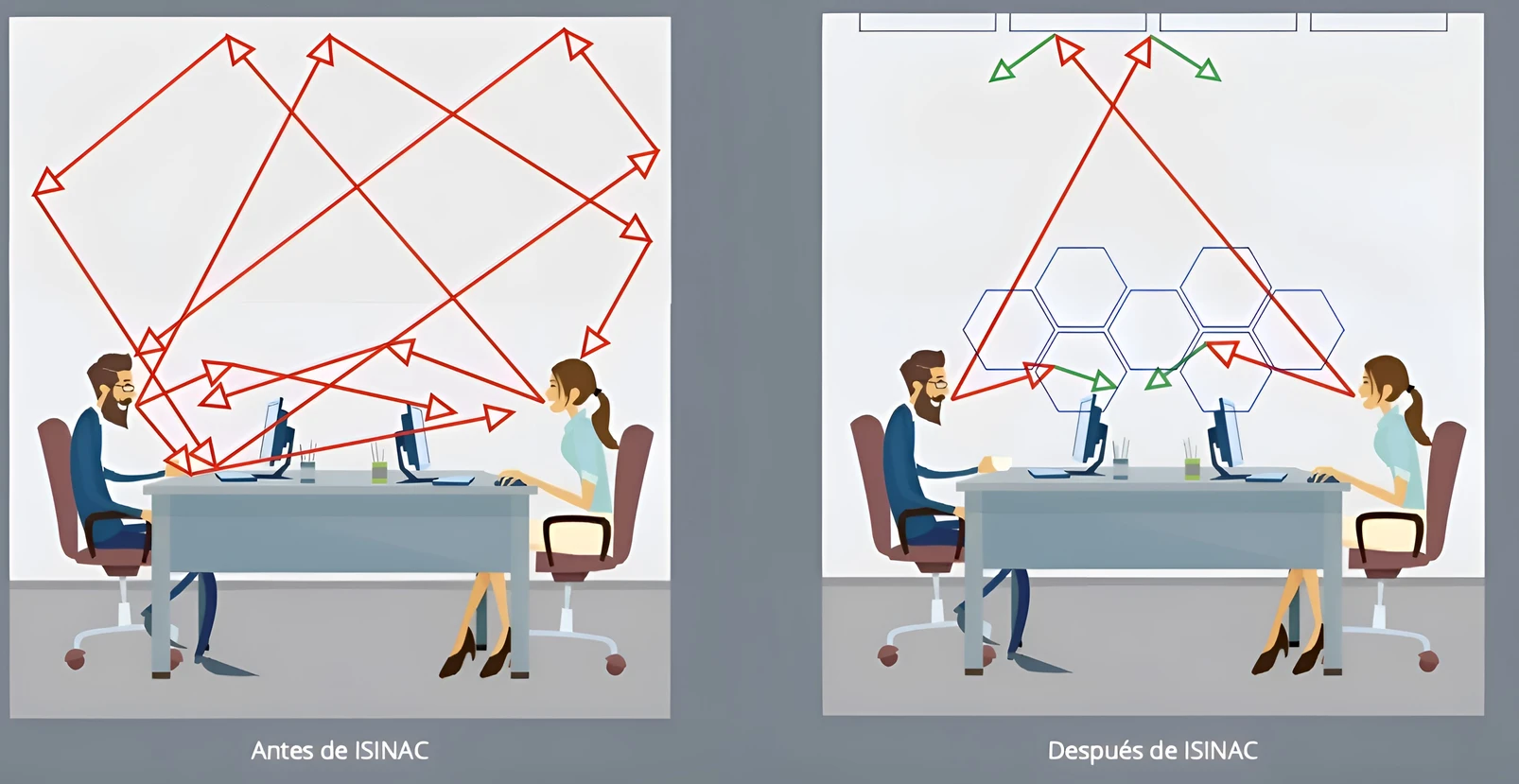
To get an idea of how it works, when a sound wave hits one of the surfaces of a room, part of this sound energy is reflected and another part penetrates the surface. In turn, this penetrating energy is either absorbed by the material and converted into heat energy, transmitted to other rooms, or reflected.
The level of energy converted into heat, primarily through vibration, depends on the sound-absorbing properties of the material. In this sense, just as it is important to know the acoustic properties of materials, it is equally important to calculate electricity consumption when using devices designed to improve sound absorption in a space.
In short, the greater the absorbent capacity of the materials in the space, the greater its absorption will be, and the propagation of sound through the space will be reduced.
The sound-absorbing properties of a material are expressed by the sound absorption coefficient, α (alpha), as a function of frequency. α ranges from 0 / 0% (total reflection) to 1 / 100% (total absorption). It can be said that:
- Absorption increases with frequency.
- For high frequencies, absorption does not depend on the thickness of the material.
- For low frequencies, absorption increases with thickness.
- The different densities of the materials facilitate absorption at different frequencies. Because the absorption coefficient of a material varies as a function of frequency, it is usually specified at frequencies of 125, 250, 500, 1000, 2000, and 4000 Hz. The edge effect, or diffraction effect, is caused by wave diffraction at the edges of the material to be measured, which in this case would mean that the sound absorption may be greater than 1.
What is the difference between sound insulation and sound absorption?
By acoustic insulation we mean the ability to limit sound transmission between two environments. Its main objective is to prevent sound from propagating from one place to another, whether to maintain privacy or to prevent the entry of unwanted noise. This is achieved through the use of materials and techniques that block or reduce sound transmission, such as walls and ceilings with high insulation ratings, double-glazed windows, and doors with airtight seals.
As for sound absorption, it refers to the improvement of acoustic comfort within a given space. The main objective of sound absorption is to control reverberation, which is the phenomenon of prolongation and mixing of sound echoes in a closed environment. Through the use of sound-absorbing materials, such as acoustic wall panels, the amount of sound reflected from surfaces is reduced, which decreases reverberation and improves sound clarity in the environment.
How to know which sound-absorbing acoustic panels suit what we are looking for?
At ISINAC we have several options regarding acoustic panels. We have solutions for the professional sector, an excellence range designed for demanding environments, mobile solutions for offices, or acoustic curtains, among many others.
The example of the curtains illustrates the versatility of ISINAC products. These are products specially designed and manufactured with materials that not only have 100% absorption (Alpha sabine 1 and NRC 1), but also soundproof by 9 decibels. As a result, there is a significant increase in acoustic comfort, all with environmentally friendly materials.
Ready to completely change your spaces? Welcome to acoustic comfort!
Tags: sound absorption
/noticias/absorcion-acustica-diferencias/