
Does classroom acoustic conditioning affect learning?
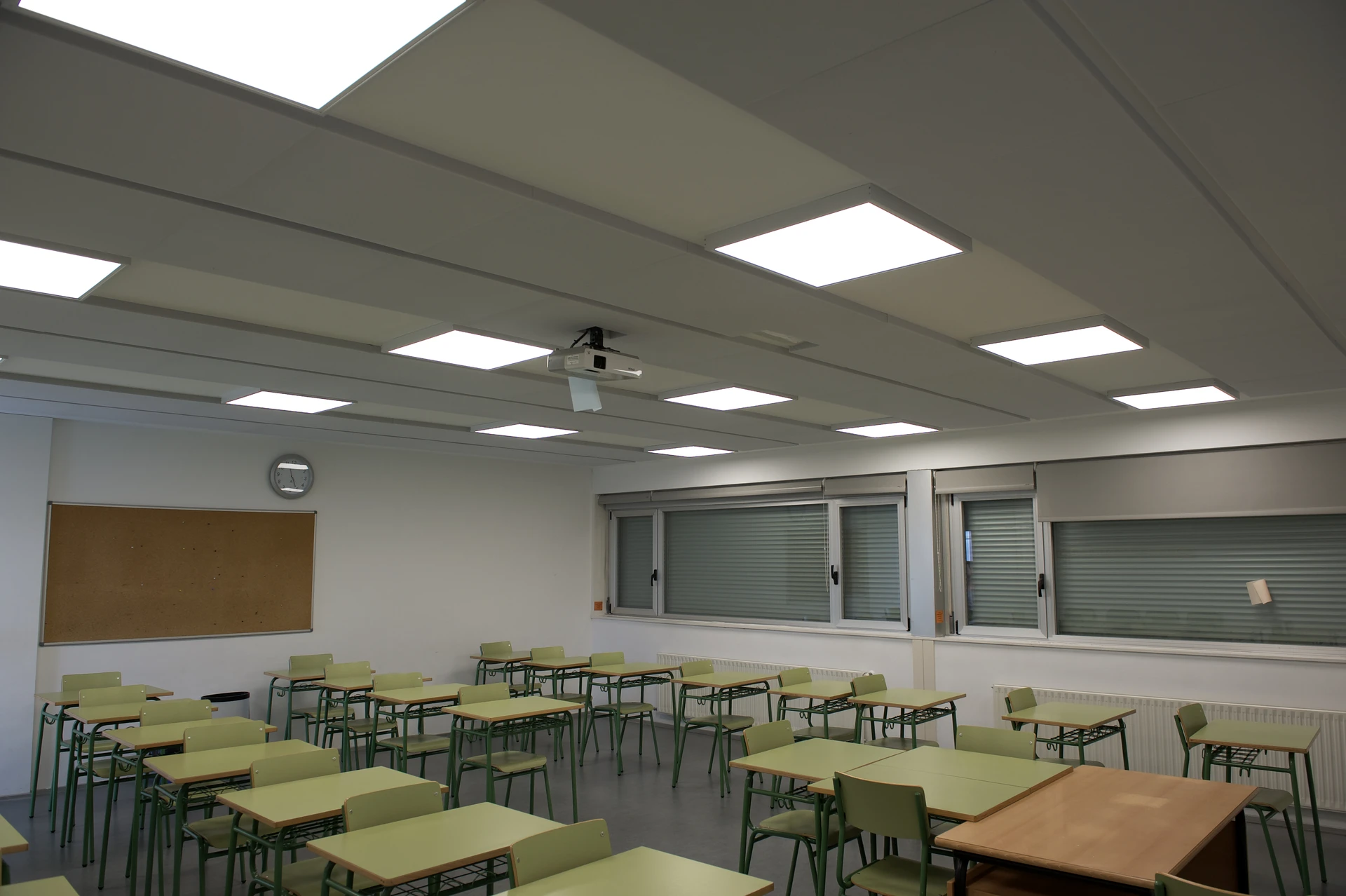
When focusing on the problem of noise in classrooms and its relationship with learning, it is essential to mention the Italian physicist Arianna Astolfi. This woman, who studied building physics at the University of Turin, decided to focus her research on the acoustic conditioning of classrooms. The reason: her children.
When they started school, they complained that they could not understand their teachers well. She decided to speak with the school and attended several class sessions in the classroom along with the children. She was able to verify how stressful the sound environment of those spaces was, which, furthermore, belonged to old buildings and were not built with acoustics in mind when teaching a class.
This, along with the meetings he held with teachers and school staff, led him to begin his research and outreach work regarding the relationship between classroom acoustic conditioning and its relationship with learning.
In her work as a researcher, she evaluated the acoustic environment of 51 secondary school classrooms and monitored the teachers' speech within them. She observed how this influenced students' performance and concentration, obtaining very surprising results, such as, for example:
- Student conversations in classrooms were the most annoying source of noise, while intermittent noises, such as footsteps, were more annoying than constant ones
- Their work led to the ‘IO ASCALTO’ project, which aims to help children with dyslexia cope with their condition through better acoustics. This is because there is a solid theoretical basis for this link between dyslexia and auditory processing in the brain, which produces a mismatch between speech rhythm and neural activation
- He concluded that reverberation times around 0.75 seconds are beneficial for the teacher's speech so that their message reaches the class clearly, as well as regarding the vocal effort the teacher themselves must make.
- He was able to determine the existence of a significant relationship between speech clarity and reading speed in children.
All the work led by Astolfi resulted in an Italian standard approved in 2020, UNI 11532-2:2020. The standard defines the acoustic descriptors that represent acoustic quality, and the reference values for the school, communicative/collective, collective, small conference and/or multipurpose rooms sector.
Although this standard currently only applies in Italy, it represents a major breakthrough as a benchmark for the rest of the countries.
The consequences of poor acoustic conditioning
Some of the consequences caused by poor acoustic conditioning in the classroom where the learning process takes place that we can list are:
- Difficulty understanding words: In a high-reverberation environment, words can blend and overlap, making speech comprehension difficult. This can negatively affect language and communication development, as well as the understanding of presented information.
- Decreased attention and concentration: Background noise caused by reverberation can distract students and reduce their ability to concentrate on the task at hand. This can negatively affect information retention and active participation in the learning process.
- Behavioral problems: Constant exposure to noise is associated with changes in children's behavior, including irritability, aggressiveness, and difficulty concentrating.
- Auditory processing issues: A high-reverberation environment can make auditory processing difficult, especially in children with learning disabilities. This can result in difficulties following instructions, processing verbal information, and understanding key concepts.
- Auditory fatigue: Continuous exposure to a noisy environment due to reverberation can lead to auditory fatigue. Auditory fatigue can make it harder for students to stay engaged in learning throughout the day.
Keys to optimal acoustic conditioning
From everything gathered in this post, we can conclude that the acoustic conditioning of the classroom not only means an improvement in the learning process itself, but also regarding the medium and long-term health of the teacher, the classroom environment as far as student behavior is concerned, or a decrease in stress and anxiety levels of both students and teachers.
The technology offered by ISINAC through its acoustic conditioning solutions for the reduction of echo and reverberation provides a source of acoustic comfort characterized by being:
– Easy to install
– In line with the design and use of the room, customizable
– High performance and low environmental impact
– Fire-resistant and hypoallergenic
– But above all, effective
If you have a project of this nature in hand, or know someone who suffers the consequences of poor acoustic conditioning in the classroom on a daily basis, do not hesitate and get in touch with us. It is a major problem that has an easy and quick solution with ISINAC.
Finally, if you have some time, I invite you to meet LEO, a child with hearing difficulties who tells us how his life has changed thanks to ISINAC acoustic panels.
Tags: sound absorption · no noise · back to school
/noticias/acondicionamiento-acustico-aula-aprendizaje/