
Not all acoustic products can be used: this is their reaction to fire
In public spaces, not just anything goes. When we talk about acoustic conditioning, there are many solutions that promise absorption that later falls short and, additionally, pose an exponential problem for users. Beyond decoration and the infinite possibilities of other raw materials that promise professional absorption, there is a problem that can be significant if a fire breaks out. In facilities such as offices, restaurants or similar, legal requirements demand products that comply with fire safety legislation.
Thus, in the event of an accident of this type, there are materials such as ISINAC mineral foam that prevent the spread of fire and minimize personal injury. On the contrary, materials that exponentially increase the risk to people's integrity can easily be found on the market at a very reduced price and of dubious origin.
To correctly choose a fire-retardant material, several aspects must be taken into account:
- The time it takes for the flame to ignite once exposed to fire.
- Whether or not it emits toxic smoke during combustion.
- Whether or not it releases droplets in the fire disintegration process.
This is how construction products are classified under the UNE-EN13501-1:2002 standard. Only products with a classification of A, B, or C; S1 or S2; and D0 meet this requirement to be legally installed in public spaces.
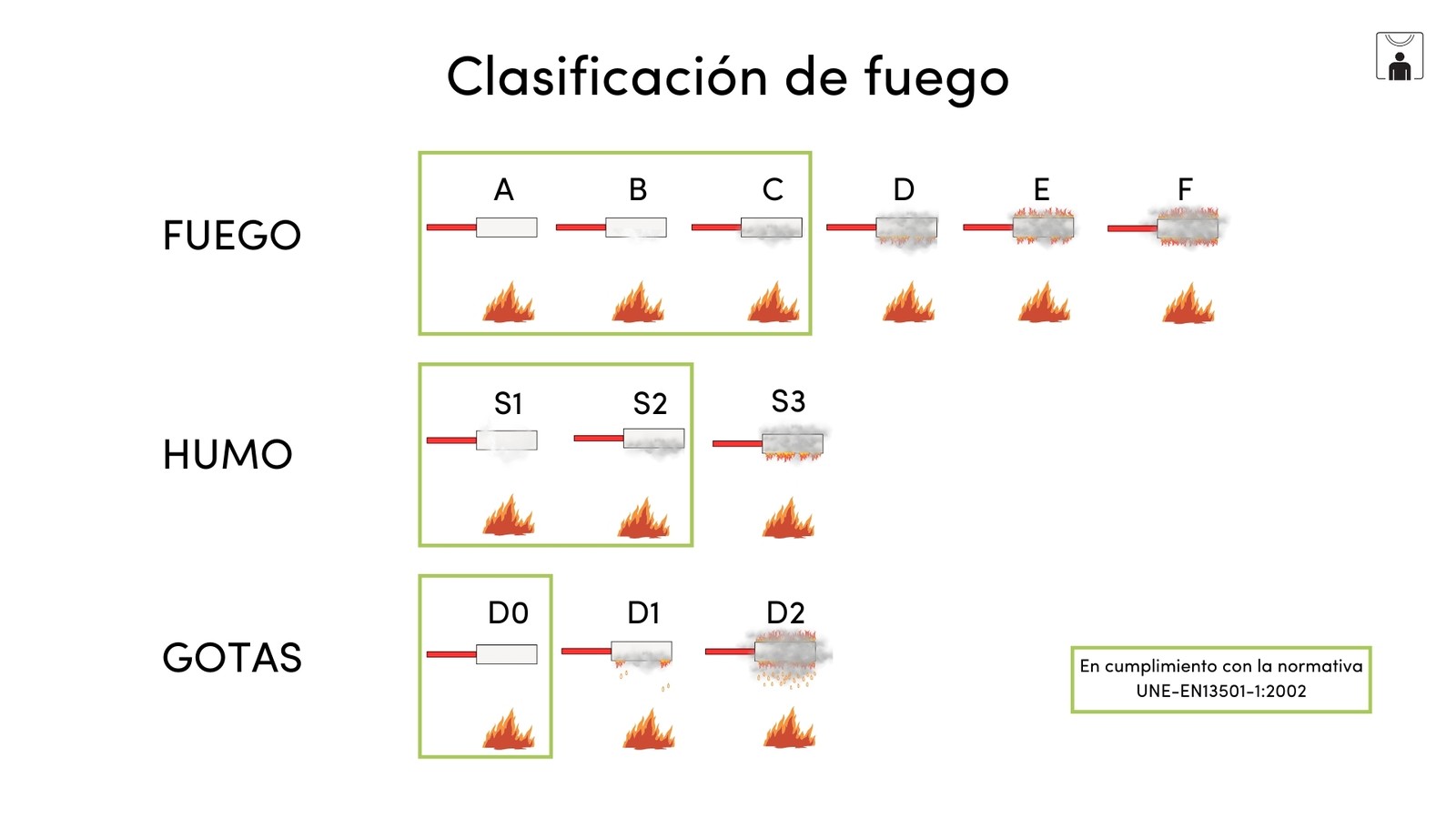
ISINAC certifies that the reaction to fire of all its raw materials and final products complies with these requirements thanks to the most prestigious laboratories on the market. Below, you can check how the most used acoustic materials on the market perform when exposed to fire.
Tags: sound absorption · acoustic comfort · mineral foam · isinac · reaction to fire
/noticias/reaccion-fuego-materiales/