
How to remove reverberation from a room: what works and how much material is needed
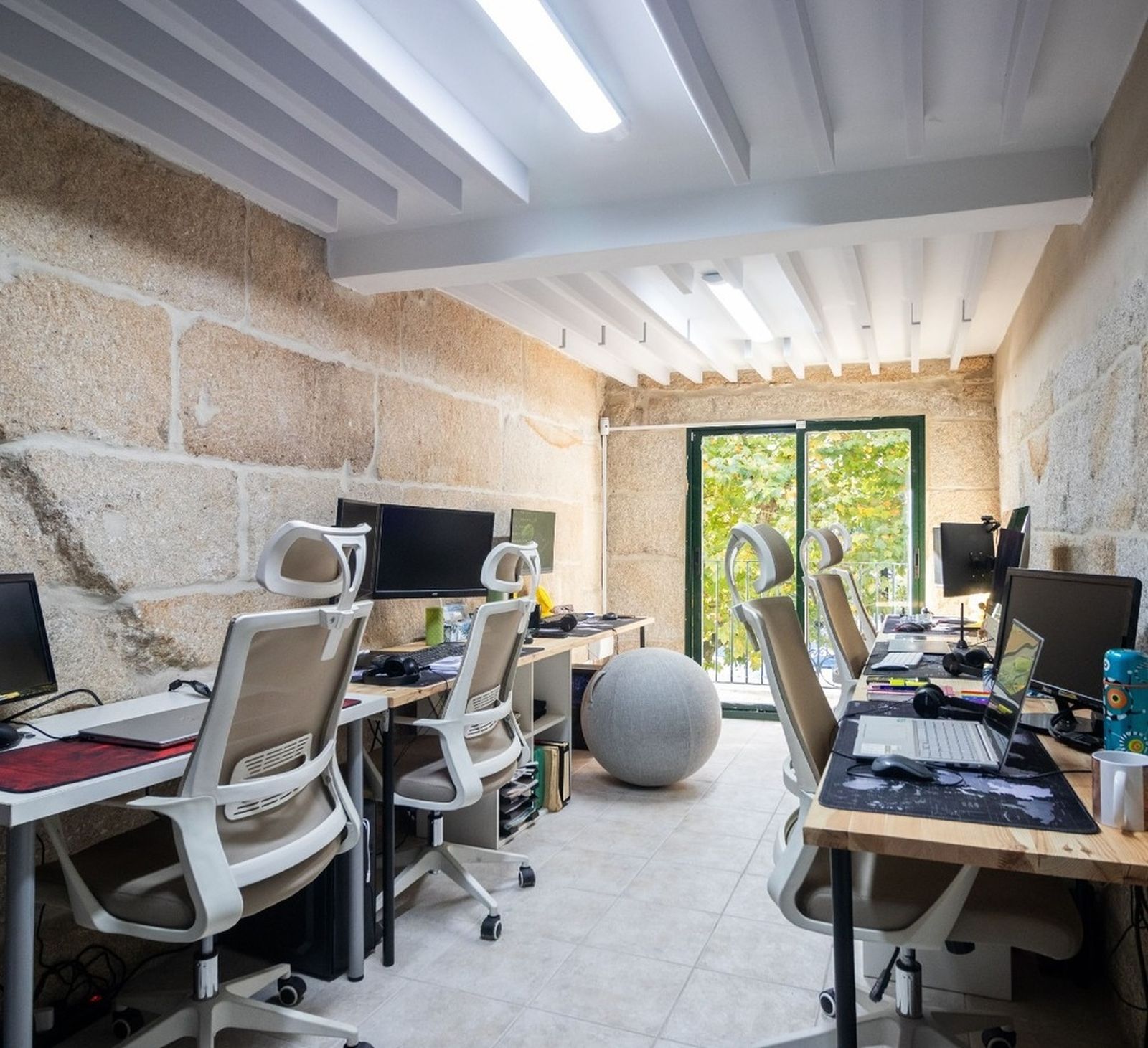
Quick answer: a room's reverberation is removed by placing sound-absorbing materials on the ceiling and walls instead of letting it bounce around. To find out how much is needed, a simple formula is used: a 180 m³ room that currently has a 2.0-second reverberation time needs about 27 m² of absorption to drop to 0.7 seconds, which means about 30 m² of acoustic panel.
Echo or reverberation?
In everyday speech we say "echo", but inside a room it is almost always reverberation: sound bounces off hard surfaces many times in a row and keeps "hanging" for a while after you stop speaking. That time is the reverberation time (T or RT60), and it is measured in seconds. The longer it is, the more words blend together, the harder it is to understand each other, and the more background noise rises because people speak louder.
How to know if your room has too much reverberation?
- The clap test: clap loudly in the centre of the room. If you hear a tail that takes a long time to fade, or a metallic "hum", there is too much reverberation.
- Conversation: if in a meeting with few people you have to repeat things or raise your voice, the room sounds bad.
- Surfaces: lots of glass, concrete, plasterboard, tiled flooring and high ceilings, and few fabrics or soft furnishings.
- Measuring it: "Calculate your room" estimates the reverberation time using the measurements and materials of the room, band by band.
What reverberation time is good?
In Spain, the Spanish Building Technical Code (CTE DB-HR, article 2.2) sets these limits:
| Room type | Maximum reverberation time |
|---|---|
| Classrooms and lecture halls of less than 350 m³, empty (without occupancy or furniture) | 0.7 s |
| Classrooms and lecture halls of less than 350 m³, empty but with all their seating | 0.5 s |
| Restaurants and dining rooms, empty | 0.9 s |
For other spaces (offices, meeting rooms, gyms) the CTE does not set a limit, but the same criteria serve as a guide: the more important it is to understand one another, the shorter the time should be.
Where to place absorption
- The ceiling: in almost every room it is the largest free surface, and it does not compete with windows, screens, or furniture.
- Facing walls: two hard, parallel walls cause sound to bounce back and forth between them. Treating just one of the two is enough.
- Distributed: several panels on different surfaces work better than placing everything together on a single wall.
- If neither the ceiling nor the walls can be touched: suspended baffles, acoustic curtains, or acoustic furniture.
What materials work
What matters is how much each material absorbs, measured in a laboratory with the αw coefficient (from 0, no absorption, to 1, total absorption). Some of our products, with their test report:
| Product | Test setup | αw |
|---|---|---|
| 40 mm IZZER panel (adhesive or magnetic) | on the surface, without cavity | 0.90 |
| ILUCS 40 mm panel, adhesive | on the surface, without cavity | 0.85 (H) |
| 40 mm ILUCS panel | suspended | 0.80 (H) |
| Pleated hanging acoustic island IZZER | suspended | 0.90 |
| WATER LILY | suspended | 0.80 (H) |
| 4-layer ILUCS CURTAIN | at 200 mm from the wall | 1.00 |
| WB ILUCS 33 mm | with a 400 mm air cavity | 1.00 |
Each product datasheet links to its test report. Always request the report: a material without a laboratory test does not allow for any calculations.
How much material is needed: a solved example
The CTE (DB-HR, section 3.2) provides the formula: T = 0.16 · V / A, where V is the volume of the room in m³ and A is the equivalent absorption area in m². If you already know the room's current reverberation time and what you want to achieve, the absorption to be added is: A = 0.16 · V · (1/target T − 1/current T).
- Room of 10 × 6 m and 3 m high: V = 180 m³.
- It currently has 2.0 s and we want 0.7 s, the Spanish Building Technical Code (CTE) limit for an empty classroom.
- Missing absorption: 0.16 × 180 × (1/0.7 − 1/2.0) = 26.7 m².
- With IZZER panel (αw 0.90): 26.7 / 0.90 ≈ 30 m² of panel. With adhesive ILUCS panel (αw 0.85): 26.7 / 0.85 ≈ 31.4 m².
It is an estimate using a single number (αw). Absorption changes with frequency, so to fine-tune it is calculated band by band: this is what "Calculate your room" does.
Common mistakes
- Putting everything on a single wall and leaving the ceiling and the opposite wall untreated.
- Buying a material without a laboratory test: without its αw it is impossible to know how much is needed.
- Confusing removing reverberation inside the room with blocking noise passing to another room: these are two different measures, absorption and soundproofing.
- Falling short: with too few square metres the improvement is hardly noticeable. Calculate beforehand how much is needed.
Frequently asked questions
How many acoustic panels do I need?
It depends on the volume of the room, how much reverberation it currently has, and how much you want to reduce it. You can use the formula above to find the square metres, which are then distributed among panels of the format you choose.
Do rugs and furniture help?
They help a little because they are soft surfaces, but they cannot be calculated without laboratory testing. For a predictable result, materials with a measured αw are used.
Does removing reverberation also eliminate the neighbour's noise?
It is not the same thing: removing reverberation means absorbing sound inside the room; blocking noise coming from another room means soundproofing. Some products do both, such as our multi-layer curtains, and each has its own test.
Tags: sound absorption
/noticias/como-quitar-eco-sala/